
How Do I Properly Clean and Floss Under a Dental Bridge?
July 10, 2026 9:00 amA dental bridge can fill a space where a tooth is missing, help with chewing, and make the smile look more complete. However, it does change up your cleaning routine a little. You can brush around a bridge like you brush your other teeth, but flossing takes a different approach.
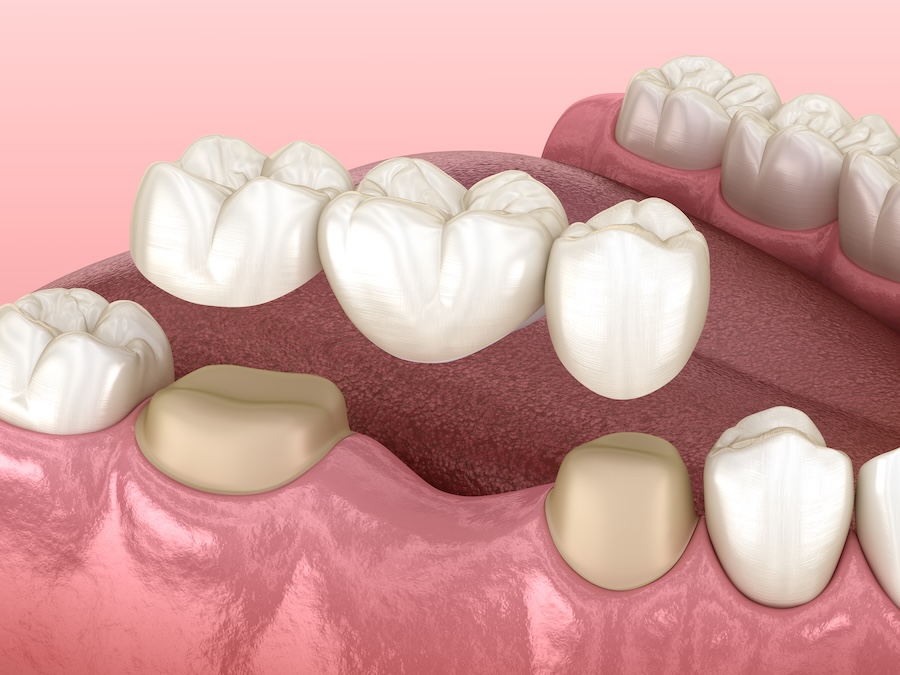
That is because a traditional dental bridge is connected. The replacement tooth, called the pontic, is attached to crowns on the neighboring teeth. Since the pieces are joined together, regular floss cannot simply slide down between the teeth and come back out the way it does around natural teeth.
Food and plaque can still collect under the bridge and around the edges of the supporting teeth. If those areas are missed day after day, the gums can become irritated, breath may change, and the teeth holding the bridge can develop decay near the margins.
At Amber Hills Dental in Henderson, NV, Dr. Aimee Villamayor, Dr. Kevin Le, and Dr. Francesca Barbin can show you which tools fit your bridge and your hands best. Some people do well with superfloss. Others prefer floss threaders, interdental brushes, soft picks, or a water flosser. Often, the best routine uses more than one tool.
Why a Bridge Needs Extra Cleaning
A dental bridge looks and feels like part of the smile, but it is shaped differently from natural teeth. The replacement tooth sits over the gum area where the missing tooth used to be. Depending on the design, there may be a small space underneath or a curved surface that rests close to the gums.
Plaque can collect along the gumline, under the pontic, and around the crowns that support the bridge. Food can also get trapped there, especially after meals with rice, seeds, popcorn, meat, bread, or sticky snacks.
Fortunately, the replacement tooth itself cannot get a cavity. However, the supporting teeth can. Those teeth are important because they hold the bridge in place. If decay forms under the edge of a crown or gum disease affects the surrounding tissue, the bridge can lose support.
Start With Careful Brushing Around the Bridge
Brushing is still the first step. Use a soft-bristled toothbrush and fluoride toothpaste to clean along the bridge, the nearby teeth, and the gumline. Pay close attention to where the bridge meets the gums and where the crowns meet the natural teeth.
Angle the bristles toward the gumline and move slowly around the bridge instead of scrubbing hard. Pressing harder does not clean better. It can irritate the gums and may make sensitive areas feel worse.
Next, brush the chewing surface of the bridge, the tongue-side surface, and the cheek-side surface. Then spend a few extra seconds around the edges where the bridge connects to the supporting teeth. Those margins are important because plaque can collect there.
An electric toothbrush can be helpful for many patients because it gives a more consistent brushing motion. However, the toothbrush still needs to be guided carefully around the bridge. Let the bristles do the work, and move from area to area instead of rushing across the whole arch.
Why Bridge Flossing Uses Different Tools
With natural teeth, regular floss slides down between two separate teeth. A bridge can be a barrier to easy flossing because the replacement tooth and supporting crowns are connected.
Instead of coming down from the chewing surface, the floss usually needs to be guided under the bridge near the gumline. Once it is under the replacement tooth, you can move it back and forth to clean the underside of the pontic and the gum area beneath it.
This is why bridge-specific tools help. Superfloss, floss threaders, interdental brushes, and water flossers are designed to reach areas that standard floss cannot access by itself.
The right tool depends on how much space there is under the bridge, where the bridge sits in your mouth, and what feels realistic for your hands. A bridge in the front of the mouth may be easier to thread than one all the way in the back. However, with a little practice, most people can find a method that fits into their normal routine.
How to Use Superfloss Under a Bridge
Superfloss is made with a stiff end, a spongy section, and regular floss. The stiff end helps guide the floss under the bridge, while the spongy section helps clean the wider space beneath the replacement tooth.
To use it, take the stiff end and gently guide it under the bridge from the cheek side or tongue side, depending on where the opening is easier to reach. Once the spongy section is under the bridge, pull it through until the thicker part is sitting beneath the replacement tooth.
Move the spongy section back and forth under the bridge to clean the underside of the pontic and the gum area below it. Then use the thinner floss portion to clean along the sides of the supporting teeth where the bridge meets the gums.
Go slowly at first. It may feel clumsy for a few days, especially if the bridge is toward the back of the mouth. After a little practice, many people find that superfloss becomes one of the easiest tools for bridge care.
Throw away the used piece after cleaning. Reusing floss can spread bacteria and becomes less effective once it is frayed or stretched.
How Floss Threaders Can Help
A floss threader looks a little like a flexible plastic needle. It helps pull regular floss under the bridge, much like threading a needle before sewing.
To use one, place a piece of floss through the loop of the threader. Then guide the firm end of the threader under the bridge. Once it comes through the other side, pull the floss into position under the replacement tooth.
From there, slide the floss back and forth under the bridge and gently clean along the gumline. You can also curve the floss around the supporting teeth as much as the bridge allows.
Floss threaders are helpful because you can use the type of floss you already like. Some people prefer waxed floss because it slides more easily. Others need a slightly thicker floss if the space under the bridge is wider.
The main drawback is that threaders can take a little more time. Even so, they work well for many bridges, especially when the space is too tight for larger tools.
Interdental Brushes and Soft Picks Around a Bridge
Interdental brushes are small brushes made to clean between teeth, around dental work, and in spaces that are too wide for regular floss to clean well. They can be helpful around a bridge when there is enough space near the gumline or under part of the pontic.
The brush should slide in with light pressure. If you have to force it, the size is probably too large for that space. Forcing an interdental brush can irritate the gums or bend the wire. A smaller size may fit better, or another tool may be safer for that spot.
Soft picks are similar in purpose, but they usually have a flexible rubber tip instead of tiny bristles. They can be convenient for quick cleaning after meals, especially if food tends to collect around one side of the bridge.
Neither tool should be jammed under the bridge or used like a toothpick. Instead, they are best for areas where there is a natural opening and the tool fits comfortably. During a visit, the team at Amber Hills Dental can show you which size works best around your bridge.
Can a Water Flosser Clean Under a Bridge?
A water flosser can be a great addition for bridge care. It uses a stream of water to flush around the bridge, under the pontic, and along the gumline. For many people, a water flosser is easier to use than threading floss, especially for back teeth or bridges that are hard to reach. It can help wash out food particles and reduce plaque around the bridge when used consistently.
To use it, aim the tip along the gumline and around the edges of the bridge. Pause between the supporting teeth and direct the water under the replacement tooth. Start on a lower pressure setting, then increase only if it feels comfortable.
A water flosser does not always replace physical flossing under the bridge. Floss and superfloss can wipe the surface in a way water alone may not. However, a water flosser can make the routine more thorough, especially when used after brushing or after meals.
If your gums bleed when you first use it, that may be from inflammation in the area. Bleeding that continues, gets worse, or comes with swelling or soreness should be checked at Amber Hills Dental.
A Simple Nightly Bridge-Cleaning Routine
Start by brushing carefully with fluoride toothpaste. Focus on the gumline around the bridge and the edges of the supporting crowns. Then use superfloss or a floss threader to clean underneath the bridge. Move slowly enough to feel the floss glide under the replacement tooth rather than snapping it into the gums.
After that, a water flosser can help rinse out loosened plaque and food particles. Some people prefer using the water flosser before threading floss because it clears out larger debris first. Either order can work, as long as the bridge is being cleaned thoroughly.
If you use interdental brushes or soft picks, keep them for the small spaces around the bridge or for quick cleaning after meals. They can be helpful, but they should not be the only thing you use if food and plaque are collecting under the pontic. Once you find the right combination for your preferences, the routine usually becomes much faster.
What if Food Keeps Getting Stuck Under the Bridge?
Some food getting under a bridge can happen, especially with certain textures. However, if food gets trapped constantly or the area feels hard to clean no matter what you use, the bridge should be checked.
There may be a space under the pontic that needs a different cleaning approach. The gums may have changed since the bridge was made. In some cases, the bridge may not fit as closely as it should, or there may be an issue near the margin of one of the supporting crowns.
Do not try to dig aggressively under the bridge with sharp objects, toothpicks, pins, or anything not made for dental cleaning. That can scratch the bridge, injure the gums, or wedge debris deeper into the area.
Instead, pay attention to what keeps happening. Is food getting stuck in the same spot every time? Does floss shred in one area? Is there a bad taste or odor even after cleaning? Those details are worth mentioning during a dental visit.
Signs the Bridge Area Needs to Be Checked
A bridge should feel stable and comfortable. If something changes, it is better to have it checked before the problem becomes more involved. Call Amber Hills Dental if you notice bleeding around the bridge that does not improve with careful cleaning, swelling along the gums, a bad taste, persistent bad breath, soreness when chewing, or sensitivity near one of the supporting teeth.
You should also call if the bridge feels loose, if floss catches or shreds in one spot, or if you notice a dark line near the edge of a crown. Those signs may point to plaque buildup, gum irritation, decay near a margin, or a fit issue.
Pain is not the only sign that something is wrong. A bridge can have a problem developing around the edges before it causes a toothache. Regular dental visits help the team check the supporting teeth, gums, bite, and bridge margins.
Professional Cleanings Help Protect the Bridge
Even with a good home routine, professional cleanings are important when you have a bridge. The hygienist can clean around the bridge, remove buildup you cannot reach at home, and show you better ways to angle your tools.
This is also a good time to bring your floss threader, superfloss, interdental brush, soft pick, or water flosser questions. If something feels awkward, say so. Sometimes a small change in angle or tool size makes the routine much easier.
Dr. Villamayor, Dr. Le, or Dr. Barbin can also check how the bridge fits and whether the bite is putting extra pressure on it. If one part of the bridge is taking too much force, it may feel sore or wear differently over time. The supporting teeth are the foundation of the bridge. Keeping those teeth and gums healthy helps the bridge last longer and feel better day to day.
Bridge Cleaning Help at Amber Hills Dental in Henderson, NV
Cleaning and flossing under a dental bridge takes a different routine than cleaning natural teeth, but the right tools can make it much more manageable. Superfloss, floss threaders, interdental brushes, soft picks, and a water flosser can all play a role, depending on the shape of your bridge and the spaces around it.
At Amber Hills Dental in Henderson, NV, Dr. Aimee Villamayor, Dr. Kevin Le, and Dr. Francesca Barbin can check your bridge, clean hard-to-reach areas, and show you how to care for it at home. Call Amber Hills Dental to schedule a visit if your bridge feels hard to clean, traps food often, or has started to feel different.
Categorised in: Dental Bridges, Oral Hygiene