

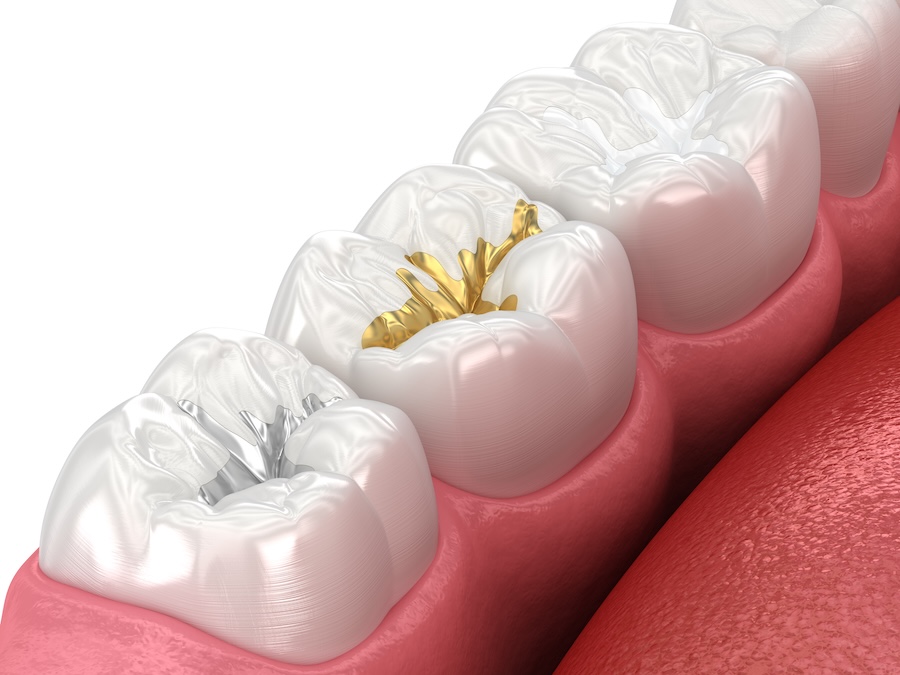
What Are the Four Types of Dental Fillings?
March 7, 2026 9:00 amWhen a cavity needs to be repaired, the goal is simple: remove the decay and restore the tooth so it can function normally again. That repair is usually done with a filling, but the material used to restore the tooth can vary.
Some filling materials are chosen because they blend naturally with your teeth. Others are known for their durability, especially in back teeth that handle strong chewing pressure. Each material has its place depending on the size of the cavity, the location of the tooth, and how much force that tooth experiences during daily use.
At Amber Hills Dental in Henderson, NV, Dr. Aimee Villamayor and Dr. Kevin Le help patients understand the options available when restoring a tooth. While dental materials have evolved over time, four main types of fillings are still commonly discussed in dentistry today.
Composite (Tooth-Colored) Fillings
Composite fillings are one of the most commonly used materials in modern dentistry. They are made from a mixture of resin and finely ground glass particles, allowing dentists to closely match the shade of the filling to the surrounding tooth.
Because of that color match, composite fillings are often chosen for visible areas of the mouth. Once polished, they blend naturally with the rest of the tooth, which is why many patients prefer them when appearance matters.
Another advantage of composite fillings is that the material bonds directly to the tooth. This bonding process helps reinforce the remaining tooth structure and allows dentists to remove less healthy tooth during preparation.
Composite fillings work well for many cavities, especially small to moderate ones. They are commonly used in both front teeth and molars, though larger areas of damage may sometimes require a different type of restoration for additional strength.
Amalgam (Silver) Fillings
Amalgam fillings have been used in dentistry for well over a century. They are made from a blend of metals, including silver, tin, copper, and mercury.
For many years, amalgam was the standard material for restoring cavities in back teeth. The reason is simple: it is extremely durable and holds up well under heavy chewing pressure.
Many patients still have silver fillings that were placed decades ago and continue to function without problems. Their longevity is one of the reasons they were used so widely in the past.
The main drawback is their appearance. Amalgam fillings have a dark metallic color, which makes them easy to notice. As tooth-colored materials have improved over time, many dentists and patients now prefer restorations that blend more naturally with the tooth.
Gold Fillings
Gold fillings are less common today, but they are still considered one of the most durable restorative materials available.
Unlike composite fillings that are placed directly in the tooth during a single visit, gold restorations are typically fabricated in a dental laboratory. This means the tooth is prepared during one appointment and the finished restoration is placed during another.
Gold is highly resistant to wear and can withstand significant chewing forces. In some cases, gold restorations last for several decades.
However, gold fillings tend to be more expensive because they require laboratory fabrication and use precious metal. Their metallic appearance also makes them more noticeable, which is why they are used less frequently today than they once were.
Ceramic (Porcelain) Fillings
Ceramic fillings, often made from porcelain, are designed to provide both strength and a natural appearance.
These restorations are typically created outside the mouth using impressions or digital scans of the tooth. The finished piece is then bonded securely to the tooth surface.
Ceramic fillings are often used when a cavity is larger and a traditional filling may not provide enough support. Depending on the amount of the tooth involved, these restorations may be referred to as inlays or onlays.
Porcelain materials are known for their resistance to staining and their ability to mimic the natural translucency of enamel. As a result, they can blend very well with surrounding teeth.
How Dentists Choose the Right Filling Material
Selecting the right filling material involves more than simply choosing between silver and tooth-colored options. Dentists consider several factors when recommending a restoration.
These factors often include:
The size and depth of the cavity
The location of the tooth in the mouth
The amount of chewing pressure the tooth experiences
The amount of remaining healthy tooth structure
The patient’s cosmetic preferences
In many situations today, composite tooth-colored fillings are the most commonly used option because they offer a balance of strength, aesthetics, and conservative tooth preparation.
However, every tooth and every patient is different. The best material is the one that restores the tooth effectively while supporting long-term oral health.
Dental Fillings at Amber Hills Dental in Henderson, NV
Dental fillings are one of the most common treatments used to repair teeth affected by cavities. While the procedure itself is routine, choosing the right material can influence both the durability and appearance of the restoration.
At Amber Hills Dental in Henderson, NV, Dr. Aimee Villamayor and Dr. Kevin Le carefully evaluate each cavity before recommending a filling material. The goal is always to restore the tooth’s strength while preserving as much natural tooth structure as possible.
If you have been told you may need a filling or have questions about existing dental restorations, scheduling an exam at Amber Hills Dental in Henderson, NV can help determine the best way to restore and protect your smile.
Categorised in: Dental Fillings, Restorative Dentistry